Literacy Panel on CJOB


So tomorrow I've been invited back to CJOB radio to participate in a panel discussion on literacy. Sort of unusual for a math teacher but then again, maybe not.


In my latest workshop on numeracy I talked about how literacy is about much more than reading and much more than what we learn in school.


It'll be interesting to compare notes with the other people on the panel: an early years literacy teacher, someone from Red River College (our local community college), and someone who works in adult education. (I don't know anyone's names yet.)


I've still got the chatterous room set up and open for anyone that would like to participate. If you've got the time, please join us:


Check the time for where you live.


Listen here.


Join the live chat.


Chatterous is blocked by the CJOB web filter. (It's not just us education folks that have to put up with this sort of thing.) I'll check in on the room after the show. Hope to see you in the chatterous room!


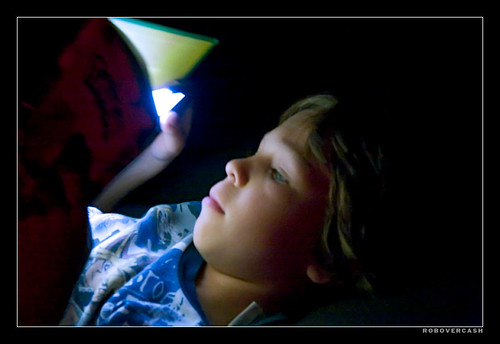
Photo Credits: Reading in bed by flickr user pixelrobber

CJOB Reflections

Friday's interview with Richard Cloutier was fascinating from a few different perspectives:


The View From The Studio


Richard was a wonderful host and I found myself taken with the entire process of putting together a radio show. He started working on this show months ago when we met over coffee. He than came to see me teach a couple of times and we had a chance to talk about how it went after each class. In one class my SMARTboard was broken so he really wasn't seeing any technology in the classroom per se other than mentions of what was happening online in the class blog. The second time we did have the SMARTboard up and running but the class was a very "meat and potatoes" algebra lesson. We did get a chance to look at how I used the SMARTboard to refer to the previous night's scribe post on the blog, how I pulled in a video from YouTube to link the dry content they were learning to some useful mental math, and how I tried to have the kids on the board more than I. (Actually, I've decided to begin analyzing my lessons and sharing that online. I hope to garner suggestions for my instructional design and more effective use of the SMARTboard. That particular lesson will be the first in that series which I'll publish here shortly.)


Richard had every minute of the show planned to the second. Nonetheless he was constantly communicating with his producer to change things midstream in response to the feedback from the audience. He was taking in email live, on the fly, working the phones, planning the upcoming sequence, coordinating those of us live in the studio with Sheryl, Dean, and Wes on the phones as well as the other callers on the phone. We wanted to also monitor the Chatterous space but couldn't get through the network filter; an issue, it seems, that's not exclusive to education. I think there's work for Clarence in the world of mainstream media professional development. ;-)


In the last week and half since the show it seems to have made a small splash online. The audio has been dowloaded over 500 times and blog reflections have come in from around the world:


Wes Fryer (Edmond, Oklahoma): pre-interview post


podcast recording


post-interview refelction


Donna DesRoches (North Battleford, Saskatchewan): A Day of Learning


Stuart Meldrum (Hawick, Scotland): Teachers take over the Canadian airwaves


Neil Winton (Perth, Scotland): New Year, New Connections, New Learning


Chris Harbeck (Winnipeg, Manitoba): A day listening to Darren on the Radio


John Evans (St. Francois Xavier, Manitoba): Darren Kuropatwa Interview on CJOB Friday, January 2, 2009


Wes Fryer - follow up post (Edmond, Oklahoma): Contrasting recent Oklahoma City and Winnipeg morning radio coverage about education


Alice Barr (Yarmouth, Maine): Week 1 of 2009 and already some amazing learning!


One common thread through all these reflections was the engagement everyone felt in the online chat. It was an opportunity to continue meaningful conversation during commercials. Over 1000 comments were shared over the three hours of the show. Here's some of what happened in the chat:


There were between 30 and 50 people in the chat at different times. They came from:


  • Maine, USA

  • New Hampshire

  • Edmond, Oklahoma

  • St. Francois Xavier, MB

  • Perth, Scotland

  • Los Angeles, CA, USA

  • Harrisburg, PA, USA

  • North Battleford, Saskatchewan

  • Winnipeg , MB

  • Charters Towers, QLD, Australia

  • Farmington, Maine, USA

  • Fort Gratiot, MI, USA

  • Wales UK

  • Charlottetown, PEI, Canada

  • Philadelphia, USA

  • Moose Jaw, Saskatchewan


Folks shared links & tips (kick youtube, snackr.net, and many more) and quotes from the show that resonated with them.


A real sense of community developed by the end. Many participants in the chat added new people to their blogrolls, exchanged twitter usernames, and contact information.


What's Next?


A number of other people are thinking about ways to engage the mainstream media in their communities around the world. What will happen here in Winnipeg? Well, maybe more people reading and commenting on edublogs, joining the conversation, more local attention for the good work my students have done and are doing. Or maybe not.


The Last Word


... in the chat was about penmanship. A valid point I think. Emphasis my own.


There is no excuse for the lack of skills of today's students. Successful handwriting can be taught to anyone in a short period of time, with a little effort on the part of the teacher. When I taught school, I reduced handwriting down to ten easy lessons, and with a plan of attack for the students to use on their own. I can boast an unusually and significant success rate. One of my lessons was entitled "One Letter at a Time". Pick a letter. Decide how you want it to look. Learn how to write it very slowly and deliberately. Then for a week or so, every time you write it, take the time to do it properly. When satisfied, choose another letter, and repeat the procedure. No student ever gets through the whole alphabet. However, overall penmanship improves drastically.

21st Century Learning on CJOB

We had a blast! Richard Cloutier was a wonderful host. His passion for the topics we discussed was palpable and he clearly "got it." Thanks Richard for inviting us into the studio.


Dean, Sheryl, Wes, and I were joined by one of my former students, Mark Rabena, and a crowd of educators from across the globe in the chatterous space we had for the event. There were over 1000 comments shared in the online chat. I'm still absorbing it all and will blog about it soon. In the meantime, if you weren't there I made an mp3 file of it without all the commercial breaks. You can listen here or download it to listen on your iPod or mp3 player.


Time: 1 hr 46 min 33 sec Download: 64 MB


CJOB Interview: Shout Out to My Tweeps


Sometime in October I went for coffee with a local radio station host, Richard Cloutier from CJOB. That conversation lead to Richard observing me teach a couple of times in the following months and finally to an on air interview scheduled for tomorrow, 2 January 2009, 9am to 11am central. This is the 30 second promo spot they've been running on the radio for the last little while:


We'll be talking about education in the 21st Century, numeracy, the impact of rapid technological change on teaching and learning, and the K12 Online Conference. Dean Shareski, Sheryl Nussbaum-Beach, and Wesley Fryer, my fellow conveners and colleagues, will all be joining the conversation for part of the show and I hope you will too.


The show will be streamed live over the internet (click on the grey Listen Live button in the top centre of the page). We'll tweet out to our twitter networks that we're on so you can listen and join in the conversation in an open Chatterous space I made special for the event. The local listening audience will be invited to participate in the chat which Richard and I will be monitoring from the studio. I'm hoping that you all act as "chat captains" keeping the conversation grounded, pushing it into good places, fostering deep conversation, and engaging and helping the local listeners as needed. This may be a new experience for many of them. Hopefully a lot of listeners will also be parents. I'm looking forward to an engaging two hours and appreciate whatever time you can spare.


If you're planning to join us ...


Check the time for where you live.


Listen here.


Join the live chat.


Hope to see you in the chatterous room!


Photo Credits: A good coffee ... / Un buen café ... by flickr user victor nuno


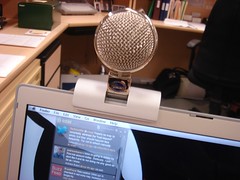
Introducing Blue Microphones' Snowflake by flickr user inju

Rick Van Eck: Games as Innovative Teaching Keynote

I've had this sitting in draft for about 7 months. It goes all the back to the end of May when I had the good fortune to attend the Microsoft Innovative Teachers Conference held here in Winnipeg. The line up of speakers was excellent, but Rick Van Eck stood out as the highlight of the entire conference for me. (I blogged about Rick's Breakout session at the time.) He has a very down to earth, practical, honest approach to using COTS (Commercial Off The Shelf) games in education. Unfortunately the question period isn't included. Rick really shined during the Q&A afterward where his direct, honest, polite replies to pointed questions impressed everyone.


Anyway, I've mentioned this talk several times in passing since I saw it and now I can point people to hear the man himself. It's short; 22 min 21 sec. Worth every minute. You can click through Rick's slides below the video as he speaks.


(Download mp3, 25.4 MB)


Slides:


Debating Standards Tests

Last night on twitter I tweeted:


That started the exchange below between myself and Gary Stager. Chris Lehmann joined in and we had a lively debate. I've decided to archive it here in response to the various communications I've received about it. Maybe extend the conversation a bit.


Gary and I


DkuropatwaGarystagerPart1of4


DkuropatwaGarystagerPart2of4


DkuropatwaGarystagerPart3of4


DkuropatwaGarystagerPart4of4


Chris Lehmann joined in. Chris' tweets should be interlaced with those of Gary and I above but summize.com doesn't do that. You can probably figure out where Chris' tweets fit in from the context of what came before.


DkuropatwaGarystagerChrislehmann


Ian Hecht added this to the debate:


These things happen on twitter. While it's happening it feels like something of moment. Time passes, passions cool, and we realize we haven't necessarily added something new to an age old debate but perhaps we've articulated our thinking, and reasons for believing as we do, a little bit better. We might also come to respect the reasoned positions of colleagues who disagree with us and walk away having learned something about ourselves and each other. Identifying Similarities and Differences is one of the most powerful instructional strategies don't you know. ;-)

And Calculus For All: Update

Why YouTube?


In the comments to my last post I was asked why I chose to use YouTube instead of TeacherTube as a platform for my students to share their videos. I answered:


I chose YouTube for three reasons:


(1) That's where the kids go for video. They feel comfortable there and have their own accounts from which they publish video outside of school. This allows me to model some digital ethics vis a vis what do you and what don't you publish on YouTube.


(2) That's where all the people are. There is a significant math community on YouTube and I am hoping to draw their attention and perhaps participation which would add value to the assignment in terms of authenticity and audience.


(3) Kids think TeacherTube is for teachers, not them. That detracts somewhat from the value added by publishing publicly online.


A number of people have left comments for my students on their class blog. Thank you so much for that. In one of those comments pirategirl mentions how slow TeacherTube can be. I guess we can add that to my list of reasons above.


Copyright


As part of this assignment we talked about copyright and I emphasized that using copyrighted material (music) is considered stealing unless they have permission to use the content. Generally, I believe that using 30 seconds or less of copyrighted music falls under Canadian Fair Dealing guidelines. (If I'm wrong about this I welcome the correction.) As part of this discussion I pointed the students to Jamendo where they could find free music to use without worrying about any copyright infringements.


I'm really proud of the way they all dealt with copyright issues and how they credited all the sources they used. Click through to their YouTube videos (see below) to read the details they included not only in the videos but in the informational text that accompanies their work.


The day before the deadline for students to publish their videos one of them left this comment on their class blog:


Maybe JAMENDO should be my name =D


it helps a lot.. thanks..


STATUS: currently cutting down 1:30 to 0:30 s.... 0__o


I was particularly chuffed about that "status update." (See the short podcast below.)


The Videos & The Podcast


Here are the four videos that the student groups generated (the 30 second time limit did not include credits) followed by a brief podcast reflection we did on the last day of classes before the winter break. Give it a listen, this project isn't over yet ...


Ben and Zeph: Calculus Commercial


Kristina, Jamie, & Joyce: YE OLDE DERIVATIVE


Paul, Shelley, & Yinan: Team PSY Derivatives Commercial


Francis, Lawrence, & Justice: Calculus commercial complete


The Podcast Reflection


(Download mp3 file, 3.3 MB)


One of the things we learned was that 30 seconds is too short. The next round of videos will have a 60 second time limit. They'll all be published by the end of January. Stay tuned. ;-)


Photo Credits: YouTube and Joost by flickr user thms.nl


Vintage Copyright by flickr user Ornithorynque