Canadian DMCA: You Can Stop This


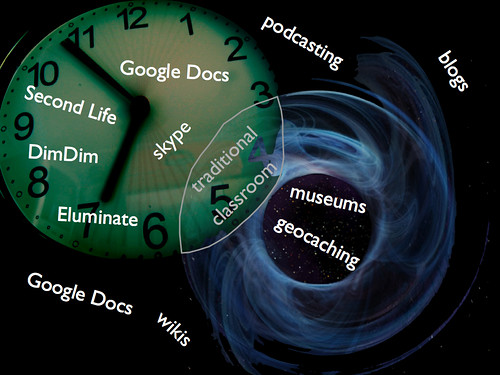
think dramatic educationImage by dkuropatwa via Flickr

Copied verbatim from Clarence who copied verbatim from Michael Geist. Please keep this going; repost. Especially if you're Canadian. This is really important. You're going to want to be able to tell your kids and grandkids "I tried to stop it. Really. I did everything I could." It'd be even better if we were able to say: "We didn't let it happen."


“Months of public debate over the future of Canadian copyright law were quietly decided earlier this week, when sources say the Prime Minister’s Office reached a verdict over the direction of the next copyright bill. The PMO was forced to make the call after Canadian Heritage Minister James Moore and Industry Minister Tony Clement were unable to reach consensus on the broad framework of a new bill. As I reported last week, Moore has argued for a virtual repeat of Bill C-61, with strong digital locks provisions similar to those found in the U.S. Digital Millennium Copyright Act and a rejection of a flexible fair dealing approach. Consistent with earlier comments on the need for a forward-looking, flexible approach, Clement argued for changes from C-61.


With mounting pressure from the U.S. – there have repeated meetings with senior U.S. officials in recent weeks – the PMO sided squarely with Moore’s vision of a U.S.-style copyright law. The detailed provisions will be negotiated over the coming weeks by the respective departments, but they now have their marching orders of completing a bill that will satisfy the U.S. that comes complete with tough anti-circumvention rules and no flexible fair dealing provision.


The bill is not expected until June, but it will have dramatic repurcussions once introduced. First, the bill represents a stunning reversal from the government’s seeming shift away from C-61 and its commitment to a bill based on the national copyright consultation. Instead, the consultation appears to have been little more than theatre, with the PMO and Moore choosing to dismiss public opinion. Second, after adopting distinctly pro-consumer positions on other issues, Moore has abandoned that approach with support for what may become the most anti-consumer copyright bill in Canadian history. Third, the bill will immediately impact the Canadian position at the ACTA and CETA negotiations, where the bill’s provisions on anti-circumvention and ISP liability will effectively become the Canadian delegation position.


For those wondering what can be done, my only answer is to speak out now. Write a paper letter to your Member of Parliament and send copies to the Prime Minister, Moore, Clement and Liberal leader Michael Ignatieff. No stamp is required – be sure to include your home address and send it to the House of Commons, Ottawa, ON, K1A 0A6. Once that is done, join the Facebook group and the Facebook page and be sure to ask others do the same. You may spoken out before, but your voice is needed yet again.”


This is an utter disaster. Thousands of Canadians responded to the recent Tory inquiry on copyright law, overwhelmingly speaking out against the DMCA disaster being brought to Canada. And yet, once again, the Conservatives show their contempt for the opinions of average Canadians. Please write your letters, make your phone calls. Even if you have done this all before, it needs to happen again.


Politics of Canada

Again, no stamps are required for letters addressed to parliament in Canada and that address is:


House of Commons


Ottawa, ON, K1A 0A6


Teaching (a pedagogical framework)

When I'm asked, in email or face to face, to explain how I use < web based tool > (blogs, wikis, podcasts, what have you) with my students I usually begin by saying: "That's not a short answer." While knowledge of how a particular tool works is important, it's really a distant second to the questions:


What do I have to teach?


and


How can I best help my students learn this?


This is the first in what I hope will be a series that explains how I think about answering those questions.


The slidecast and the videos are best watched in Full Screen mode.


Slidecast


Video


A higher quality video is available via my blip.tv channel.


Audio (8 min 4 sec)


Download 7.4 Mb


Transcript


Years of research into teaching and learning have uncovered some basic fundamental principles of how all people learn. This will just be a quick overview of how I've tried to bridge that research with my practice and what I'm calling a pedagogical framework.


But first an excursion into the world of photography. The photographic technique of framing involves finding something that draws the eye, that sits around an object to draw the viewers' attention to that thing. Here's an example.


The lady is the object of this picture the eye is naturally drawn to see her there in the centre as she's framed by the windows of the subway car.


This is a strong example of framing as we see this man walking through the arches and those arches form a frame. The eye is inexplicably drawn towards the centre of the picture where we see the man.


In this case, a more subtle frame. And yet nonetheless it's clear that the horse is the object of the picture because the tree — which we don't really look at, it kind of sits in the foreground, the eye is really drawn towards the horse — provides a frame to see the horse.


What does this have to do with teaching and learning? Just bear with me.


First the three pedagogical principles, drawn mainly from this book: How People Learn. It was written in ... I believe it was 1999 and then it was updated again in 2000. Studying years and years of research they pulled out three fundamental principles of how people learn. As an outgrowth of that book another one was written called How Students Learn, specifically in the areas of History, Mathematics, and Science. These books have been absolutely seminal in forming my thinking and providing the pedagogical framework around which I structure all the teaching that I've done.


Typically when kids come to school they think of the world as flat. They have no reason to think of it as round and they come to school and we tell them the world is round. What studies have shown is that once kids leave school and they're asked to explain what they've learned: "Well the world is round." And their conception of the world is that it's a giant pancake. That's an interesting preconception that kids bring with them when they come to the classroom and teachers need to know that. Because the first principle out of the book is that "students errors and misconceptions based on previous learning" are the first thing that teachers have to try to connect with when they're trying to teach new content.


In this example, one drawn from mathematics, kids are often taught that multiplying is repeated addition. Multiplying is not repeated addition (although that's a good place to start) and they think that the answer to any question, when they multiply, has to be bigger than any of the numbers they started off with. Given a problem like this, fractions, well kids find that really hard, they just mul... they see the two the three and they know they have to have an answer that's bigger than either of them. If we know that that's the preconception that kids bring to the classroom then that can inform our teaching in constructive ways.


The second principle out of the book is that understanding requires not only factual knowledge, knowledge of basic facts, but an understanding of the basic ideas or big ideas of the discipline, whatever the discipline is that happens to be that you're teaching. Because knowledge isn't actually built in hierarchies knowledge is actually built in networks. For example, take something simple like three quarters. It seems like a pretty simple idea. But the number three quarters can be represented in a variety of ways. All of these are equivalent ways to write three quarters. It might have meant money, seventy five percent, it could be the ratio of three to four, point seven five or another way to write the fraction three quarters. Now even this extends beyond that because, "three quarters", well I could have been saying the money, three coins, three twenty five cent coins, which is seventy five cents. You see all these ideas are connected one to the other.


I might have been talking about a piece of cake; that I have three quarters of a cake. And it's implicit in that idea that each of those quarters is the same size. That each piece of cake has to be equivalent in size. But that's not always true with all ratios.


For example the ration of three red Smarties to four blue Smarties. I've got seven Smarties in total. And those Smarties don't all have to be the same size for my ratio of three red to four blue to be true.


These implicit assumptions make learning this material difficult for kids, and we as teachers make assumptions because we understand from the context that these things are clear. It could be seventy five percent off everything. That these ... All of these ideas actually live a network all one related to the other. The underlying assumptions that we make as experienced learners is that we take, from the surrounding context, what the meaning of each of these numbers is. And yet each one is related to the other.


That network has to be made explicit. That network of concepts has to made explicit to students. No matter what fundamental idea you're trying to get across to the students. In this case, the idea, the big idea, is really one of proportion.


The third principle out of the book is that "learning is facilitated through the use of meta-cognitive strategies". The degree to which we can get kids to think about what they're learning as they're learning it will deepen that learning. And they found that this made only moderate increases for high performing students, but for low performing students the use of meta-cognitive strategies made for dramatic increases in their performance.


Error analysis is a great example of this kind of thing; you've probably caught that one really quick. But as you look at this picture and try to find the error look how you're thinking about it. Look how you're paying attention to certain details; finding what's the same, what looks exactly identical? Where is the difference? Where is the thing that stands out one different from the other? And if you pause to reflect even as you're thinking about this now you'll notice that you've deepened your own thought as you look for the error in just something simple, like a picture of three Mounties.


So that's the framework. That's the framing. That's the ... Those are the ideas that sit around any pedagogical approach that you want to take in class. Any time you want to structure or design a learning experience for students these three principles:


Connect with kids preconceptions.


Learning should be networked. Ideas are networked. You need to understand basic facts but also the big ideas around which knowledge is structured.


And engaging kids in meta-cognition as they're learning.


This provides the framework for how we teach.


There's one last thing not to exclude in any of this and that's "community". It's alluded to in that book but not listed as one of the fundamental principles; but "community" is a pretty big deal. Because the degree to which we can get kids working with each other and collaborating and helping each other in their learning, which is what genuine learning looks like, is the degree to which they can deepen and accelerate their own learning.


This provides a wonderful example of exactly what I'm talking about: Why do geese fly in this "V" shape? It seems quite distinctive to see the Canadian geese flying in that pattern. It happens in the Fall, around October, and then again in the month of March as when ... as the geese leave in October and return in March. Why the "V" pattern? Because the flapping of the wings of the lead goose actually provides a little lift for the geese just behind them. And that's true for each goose behind every other goose. And so they're able to fly greater distances. Of course this puts undue pressure on the lead goose. So throughout the flight the geese are constantly shifting positions and rotating their spot in the "V" shape flight pattern. So that different geese take the lead at different times. And by working together the geese are able to fly for much greater distances than any of them would be able to fly on their own. And together they accomplish great things which is the very distant migration patterns of the Canada geese. Of course over short distances, if everybody goes their own way, well, yeah, you could have some success, and when they all land that's what it looks like. And they all kind of come down and each one chooses their own pattern and the "V" is broken up. And occasionally, you know, you need to do that, but by and large, for the most part, it's through that collaboration that great things become possible. And that's part of that framework that I talked about.


It's just like we learned in kindergarten: When you go out into the world, hold hands and stick together.


Teaching Interdependence

... was the title of the Keynote address I gave to 500+ educators at this year's B.Y.T.E. conference. The sense I had of the audience was that many of the ideas I talked about here were new to them. A quick survey of the room while giving the talk revealed only about three people had heard of Wolfram Alpha and I think about the same number had heard of the TPACK Framework.


I hope I get a chance to do this talk again. There are a number of things I think I could have done better.


Anyway, if you're interested, here it is in various formats. You pick how you'd like to take it in.


Audio


Download (20 MB)


Slidecast


Ustream Video (thanks to Chris Harbeck


"Infotention" or scraping the cream off the top of what you want to know

How do you deploy your attention?


Infotention: “Honing the mental ability to deploy the form of attention appropriate for each moment is an essential internal skill for people who want to find, direct, and manage streams of relevant information by using online media knowledgeably.


Knowing how to put together intelligence dashboards, news radars, and information filters from online tools like persistent search and RSS is the external technical component of information literacy.”


It's getting harder to attend to something that interests you because of the abundance of information available to us on any topic. So, how do you get to the "best" stuff about something that interests you? Fast. Say, something like "augmented reality".


Howard Rheingold recently published a little "how-to" that answers that question. About 17 minutes long but it's well worth the time.


Seems to me if you're information literate you know how to dig up a wealth of information on any topic that interests you fairly quickly. If you're information fluent then you can probably arrange to have only the very best of what's out there delivered to you while you sleep.


Watch this, Howard's brilliant:


Always Beta 03: textbooks Learning Platforms

If you missed it: part 1, part 2.


In this third part of my interview with Carly Shuler we talk about reimagining digital textbooks as learning platforms.


11 min 25 sec


Download (10 Mb)


I haven't done much digging in this space until recently. If it interests you here are some other things worth looking at:


Videos Mentioned


∞β

Always Beta 02: (mobile) Learning Beyond Time & Space

If you missed it: part 1.


In this second part of my interview with Carly Shuler we continue the discussion of the state of technology in Canadian classrooms and find ourselves talking about Mobile Learning; a topic close to both of our hearts.


When I talk about the shift of learning times and spaces, this is what I was thinking of:


Time and Space v2 by flickr user dkuropatwa


CORRECTION: Towards the end of this segment I talk about the 2010 Horizon Report. I said the 2009 Horizon report had Mobile Learning on the 1 to 2 year horizon but this years report doesn't mention it all. I was wrong. Mobile Computing is still on the 1 to 2 year Horizon. My apologies to the authours of the report.


9 min 49 sec


Download (9 Mb)


∞β

Always Beta 01: The Future of the Textbook ... we need a new metaphor


FBI Classroom by flickr user billerickson

Last week I was interviewed by Carly Shuler. We talked about many things. Mainly she wanted to talk about the future of the textbook in the digital age from the perspective of textbook publishers.


The interview was about 50 minutes long so I've broken it down into 4 or 5 chunks.


This first bit focuses on the current state of technology integration in Canadian classrooms. I told her what I know. You probably know more about it. Please share it here in the comments. Thanks.


13 min 16 sec


Download (12.1 Mb)


∞β